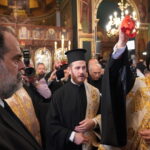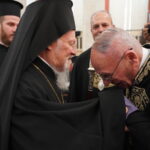
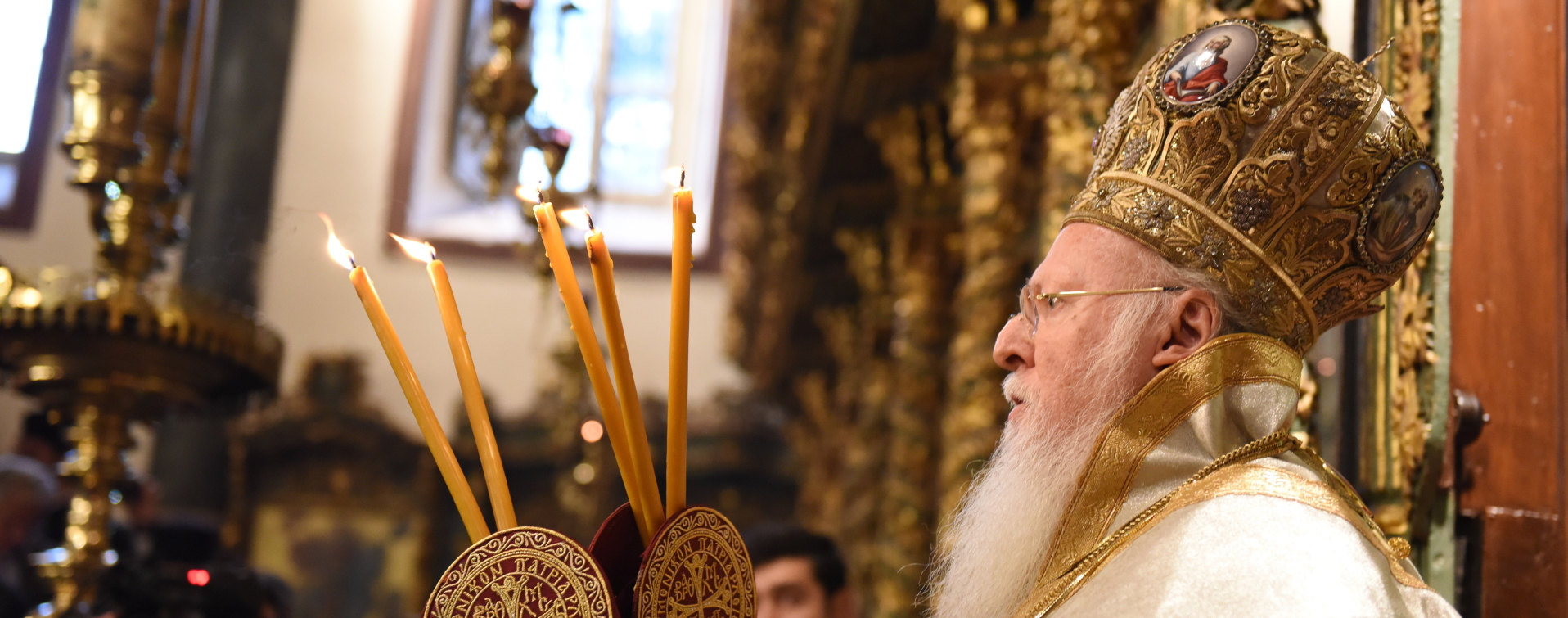

In November 2004, the sacred relics of two renowned Archbishops of Constantinople were solemnly restored to the Ecumenical Patriarchate, St. Gregory the Theologian (329–390) and St. John Chrysostom (c. 347–407). His All Holiness Ecumenical Patriarch Bartholomew I presided over a service of thanksgiving for their return and reception during the Thronal Feast of St. Andrew “the first-called of the Apostles.” This historic occasion was the celebration and conclusion of a series of painful as well as joyful events.
The two saints served as Archbishops of Constantinople during
the late fourth and early fifth centuries, a creative period for Christian theology
and liturgy. St. Gregory was regarded as the theologian par excellence, delivering
five extraordinary Theological Orations on the Holy Trinity and preparing the
way for the triumph of orthodoxy during the Second Ecumenical Council (381),
which completed the Symbol of Faith, also known as the [Nicean- Constantinopolitan]
Creed. St. John is widely recognized as the greatest of preachers and one of
the most popular of the Greek Church Fathers in both East and West; his remarkable
sermons On the Priesthood remain formative reading on the ministry.
The relics of these Archbishops were formerly treasured in the Church of the Holy Apostles in Constantinople, where they lay side-by-side from the tenth century. St. Gregory was originally buried in Cappadocia, where he retired around 381; his relics were transferred to Constantinople in the tenth century by the Emperor Constantine Porphyrogenitus VII. St. John was originally buried in Koukousos of Asia Minor, where he died while in exile; his relics were returned to Constantinople in 438 by the Emperor Theodosius II.
The relics of the two saints were taken to Rome after the Fourth Crusade in 1204, which left a deep and lasting wound in the memory of the Orthodox Church. St. John Chrysostom’s relics were placed in the medieval Church of St. Peter’s at the Vatican, while St. Gregory the Theologian’s were kept in the convent of St. Maria in Campo Santo.
In 1580, with the construction of St. Peter’s new basilica in the sixteenth century, Pope Gregory XIII transferred the relics of St. Gregory to a side altar, which came to be known as the Capella Gregoriana, in the nave of St. Peter’s. In 1626, the relics of St. John were transferred to another altar in the nave, known as the Choir Chapel.11
The relics of the two Patriarchs of Constantinople remained in Rome for 800 years and in the new basilica of St. Peter’s for 400 years.
In the early 1960s, in an act of fraternal fellowship, Pope Paul VI returned
the sacred relics of certain saints belonging to the Orthodox Church, including
those of St. Andrew (formerly preserved in the Amalfi, Italy) to Patras and
St. Mark (formerly preserved in Venice, Italy) to the Coptic Church. The mid-
1960s and 1970s also witnessed the extraordinary vision of Ecumenical Patriarch
Athenagoras, who embarked on a “dialogue of love” with the Roman
Catholic Church. In 1980, the “dialogue of truth” marked the commencement
of the theological discussions between the two Churches.
In June 2004, the Ecumenical Patriarch attended the Patronal Feast of the Roman Catholic Church (June 29). While the invitation is extended each year and the Ecumenical Patriarch is represented annually, that year also marked the 40th anniversary since the inception of the “dialogue of love” established in Jerusalem in 1964 as well as the 800th anniversary since the Fourth Crusade. On this occasion, Pope John Paul II officially apologized for the tragic events of the Fourth Crusade.
In response, Ecumenical Patriarch Bartholomew I observed that no material compensation was at that time appropriate, but the rightful return of the sacred relics of the two Archbishops of Constantinople would comprise a spiritual restoration of that Church’s legacy. The return of their relics would be a tangible gesture of the acknowledgement of past errors, a moral restoration of the spiritual legacy of the East, and a significant step in the process of reconciliation.
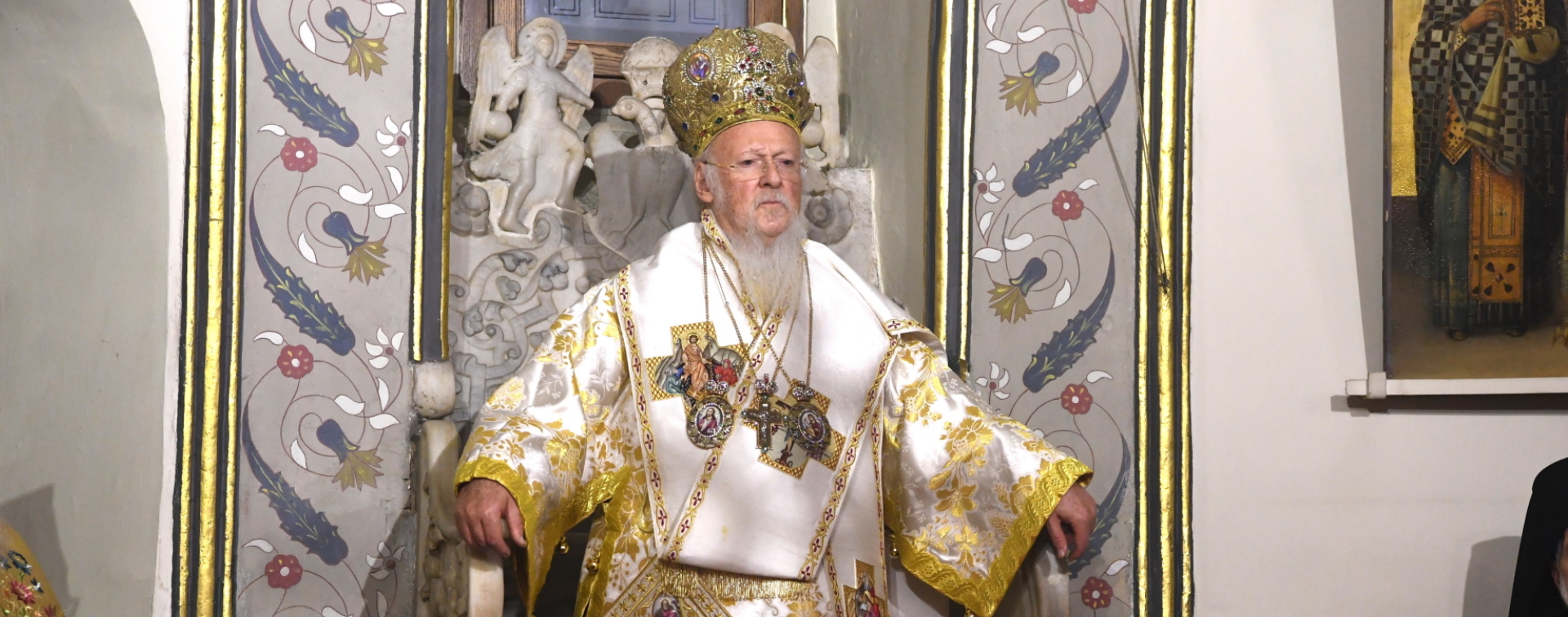
Ecumenical Patriarch Bartholomew I personally accompanied the relics of the great Hierarchs to Constantinople on 27 November 2004, following an official service and ceremonial procession at St. Peter’s in Rome. In the Cathedral of St. George, the crystal cases containing the relics were placed on the solea, immediately before the Patriarchal Throne. In accordance with ancient practice and protocol, during a service of Thanksgiving in the presence of representatives from all Orthodox Churches as well as a formal delegation from the Vatican led by Cardinal Walter Kasper, the Ecumenical Patriarch symbolically deferred to the Saints by offering the Throne in honor of their preeminence, while he sat in the parathronion or side-throne.
The return of relics is more than a purely historical event
of theological importance; traditionally, it is a liturgical feast of spiritual
significance. The new Feast of the Translation of the Relics of St. Gregory
the Theologian and St. John Chrysostom, to be commemorated henceforth on November
30th as the official date of their reinstallation, will coincide with the Thronal
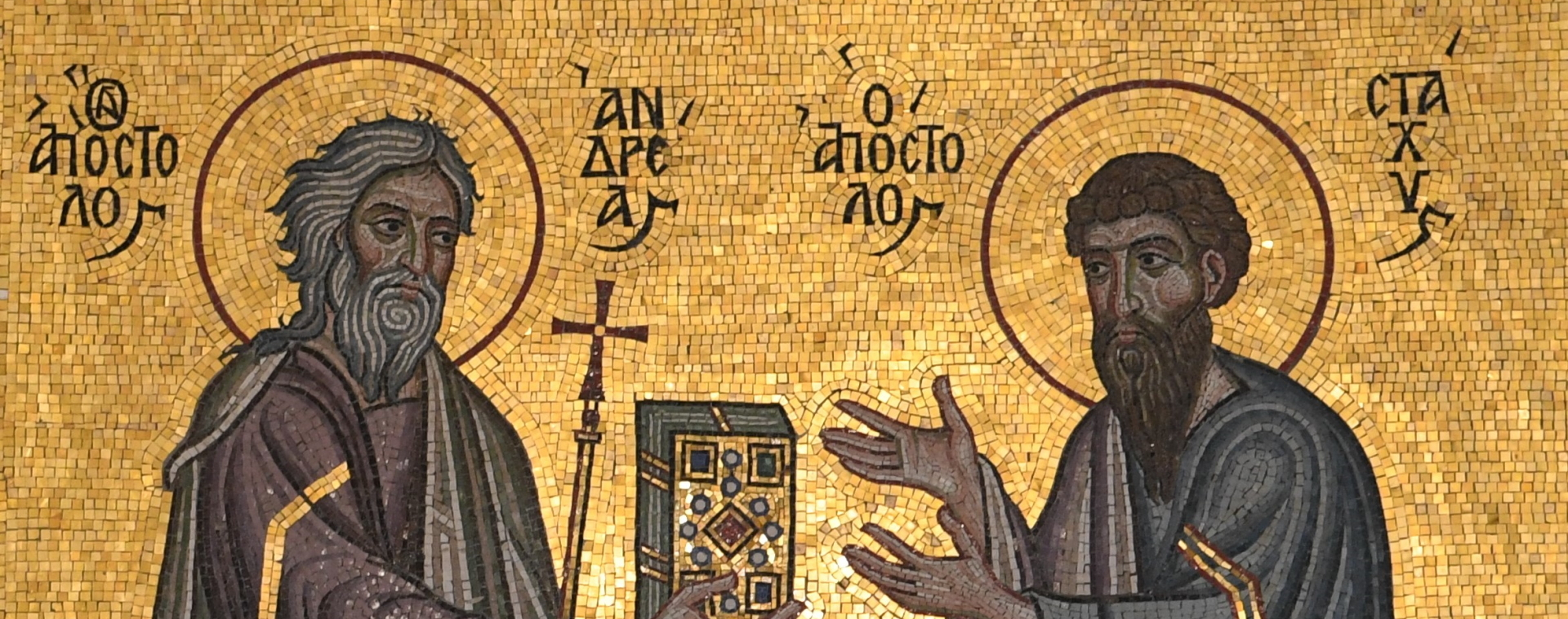
Feast of the Church of Constantinople, namely the Feast of St. Andrew “the
first-called of the Apostles.”
What had begun in June of 2004, with the formal request of the relics during the Patronal Feast and inside the Basilica of St. Peter, concluded in November of 2004, with the solemn return of the relics during the Thronal Feast of the Mother Church of Constantinople, whose patron Saint is Andrew, the brother of St. Peter.
This, too, was a further sign of the significant step toward reconciliation that occurred through the return of the sacred relics. The event has been memorialized in the new hymns composed by Metropolitan Evangelos of Perge. The relics are now treasured in the Patriarchal Cathedral of St. George in the Phanar, located at the mid-point of the north wall of the nave.
Behold, the mystic of God and preacher of dogmas, Gregory the mind and glory of theology, comes to comfort us with his Relics; for he was our fellow-citizen from the ages and spoke before this very throne, as a divine treasure.
The Church once more rejoices splendidly on the arrival of your sacred Relic to the City, which you worthily shepherded; and she glorifies the heavenly Giver, O Father John Chrysostom, crying aloud: Behold your throne, O holy one.


Watch the historic interview with CBS correspondent Bob Simon now »
Learn More »
Learn the history of the Theological School of Halki since its establishment in 1844. Learn More »
YouTube: Subscribe to the GreenPatriarch channel (on the Environmental Symposia) or the Ecumenical Patriarchate channel (on the US visit).
Friday, May 17, 2013
On Friday, May 17, 2013, the Ecumenical Patriarchate honored the 1700th anniversary of Emperor Constantine the Great's "Edict of Milan" by hosting an international and interfaith one-day seminar in collaboration with the Council of European Episcopal Churches at the Conrad Hotel in Istanbul, Turkey. Read more...
Please enter a search term to begin your search.